
H.M.S. Pinafore
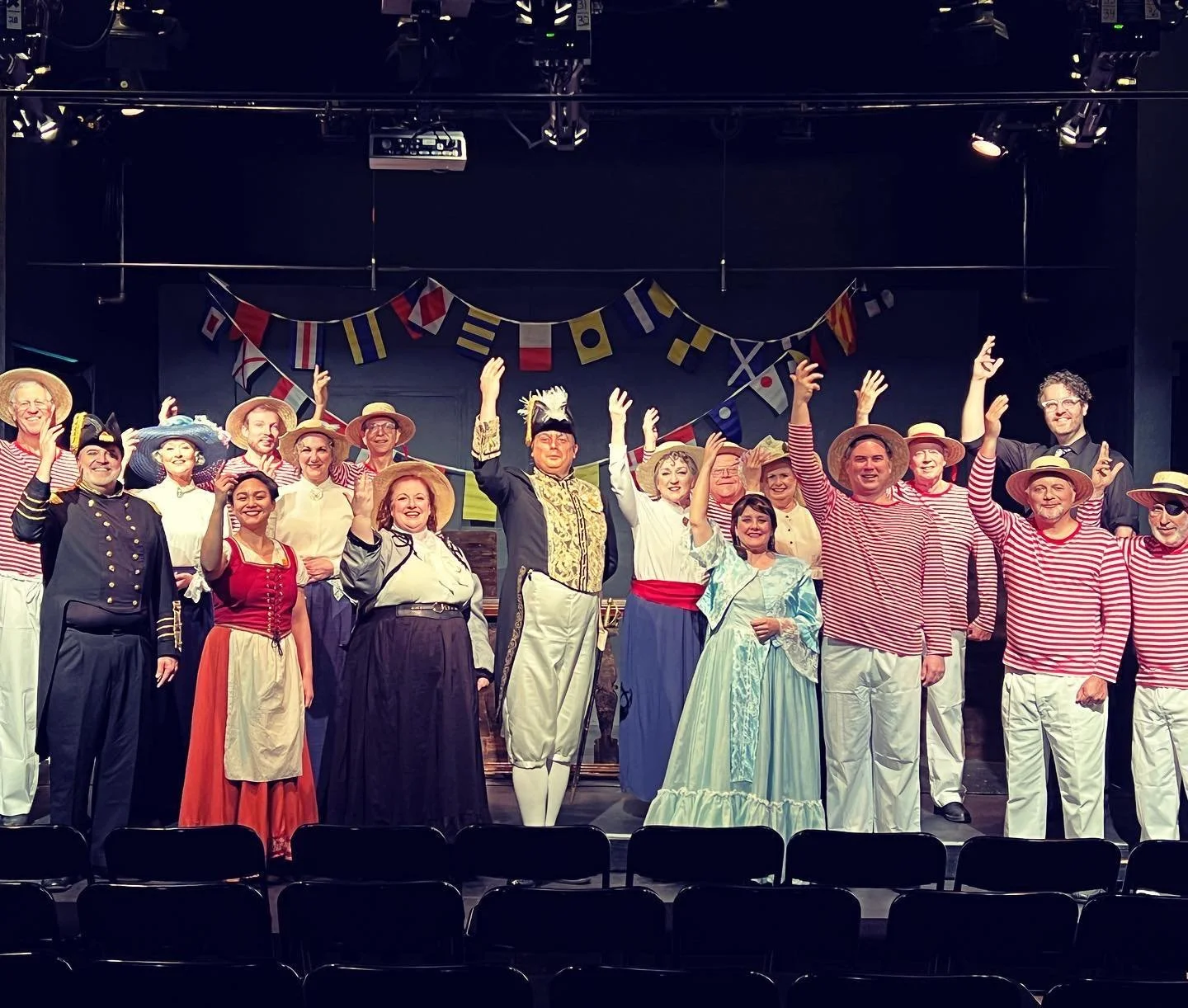
Lyrics by W.S. Gilbert
Music by Arthur Sullivan
May 20, 21, 27, 28, 2022, 7:30 P.M.
May 22 & 28, 2022, 1:30 P.M.
Chapel Theater
4107 SE Harrison Street
Milwaukie, Oregon 97222
Cast and Crew
The Rt. Hon. Sir Joseph Porter, K.C.B.
(First Lord of the Admiralty)
Laurence Cox
Captain Corcoran (Commanding H.M.S. Pinafore)
Tom Harper
Ralph Rackstraw (Able Seaman)
Rawdon Taylor
Dick Deadeye (Able Seaman)
David Ridley
Bill Bobstay (Boatswain’s Mate)
Casey Lebold
Bob Becket (Carpenter’s Mate)
Allen Denison
Josephine (The Captain’s Daughter)
Lindsey Lefler
Hebe (Sir Joseph’s First Cousin)
Shelle Riehl
Little Buttercup (A Portsmouth Bumboat Woman)
Beatriz Abella
First Lord’s Sisters, his Cousins, his Aunts
Anne Kolibaba Larkin
Beth Kahlen
Bryna Montgomery
Cathrine Huard
Sailors
Director
Laurence Cox
Music Director
Reece Sauve
Producer
Sara Quinn Rivara
House Manager
Chase Reinhardt
Stage Manager
Jason Muehe
Lighting Manager
Christie Muehe
Lighting Setup
Amanda Healy
Costumes
Lucy Tait, Phyllis Fort, Lindsey Lefler, Jordyn Pounders, Sandra King
Set
Laurence Cox, Allen Denison, Tom Harper, Lindsey Lefler, Ethan McCrann, Jerry Woodbury
Program
Sheryl Wood
Posters and Logo
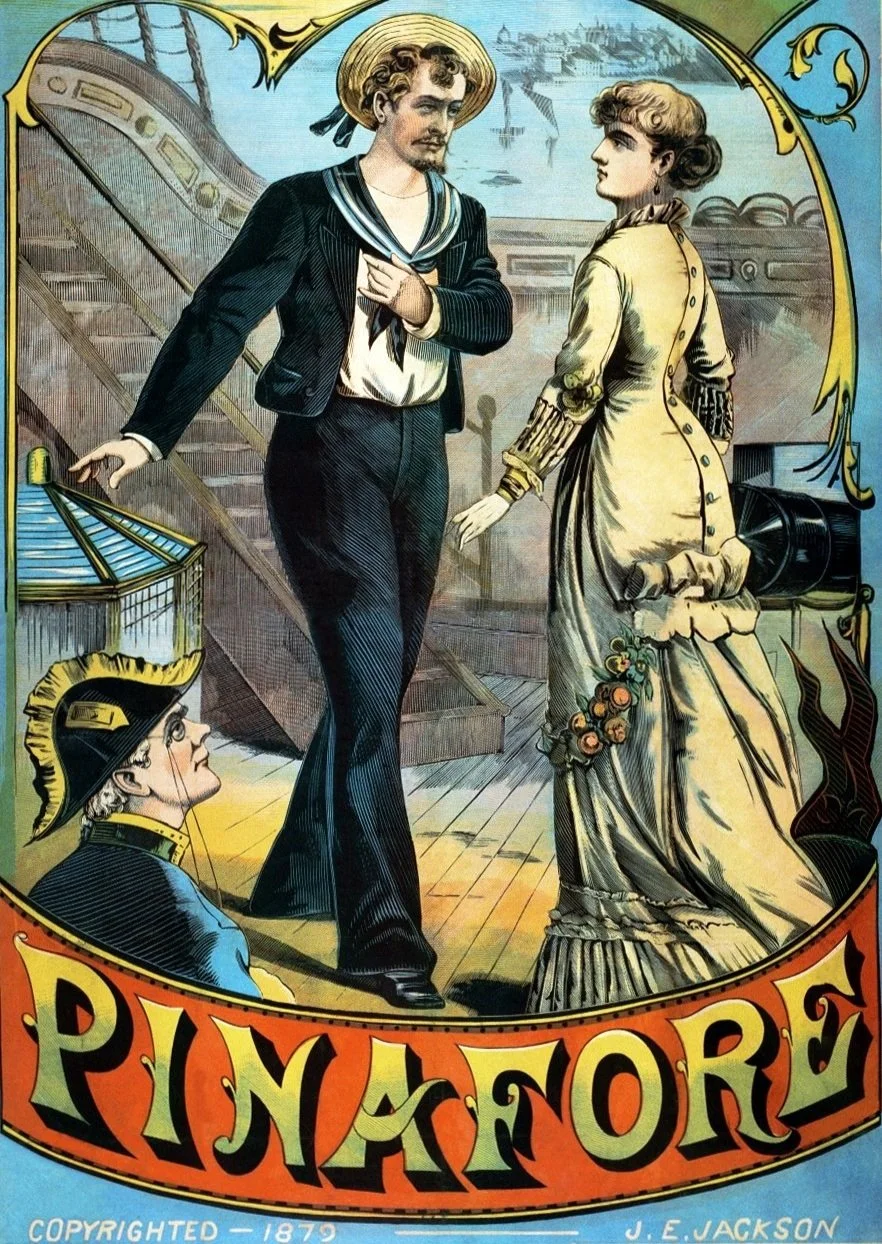
Laurence Cox, Alice B. Woodward
SUmmary
The fourth collaboration between Gilbert & Sullivan was their first major success: H.M.S. Pinafore; or, The Lass That Loved a Sailor. It opened on May 25, 1878 at the Opera Comique where it ran for 571 performances. Touring companies spread its popularity throughout Britain and in America numerous companies “pirated” the work by staging productions without the consent of the authors and without paying them any royalties. Gilbert, Sullivan and Carte tried to beat the pirates by mounting their own production in New York. Today, Pinafore remains one of the most popular Gilbert and Sullivan operas.
Drawing on several of his earlier “Bab Ballads”, Gilbert imbued H.M.S. Pinafore with mirth and silliness to spare. He pokes fun at the notion that the First Lord of the Admiralty should be a purely political appointment whose holder need never have been to sea. Sir Joseph Porter has arisen from humble beginnings to that high office by political acumen and not only insists that all orders should be qualified by the phrase “If you please” but writes songs to promote “independence of thought and action in the lower branches of the service”. We meet the snobbish Captain, who never swears a “big, big D” (Well, hardly ever!) and who is horrified to find his daughter is in love with a “common” sailor on board his own ship whilst himself nurturing a fondness for a poor bumboat woman. How will it be possible for his daughter to be united with the man she loves without marrying beneath her station? Fear not: it all works out in the end. Hip, hip, hoorah! (G&S Archive)